
 Image 1 of 1
Community support for the Launceston General Hospital 1881-2020.
edited by Paul AC Richards and Barbara Valentine
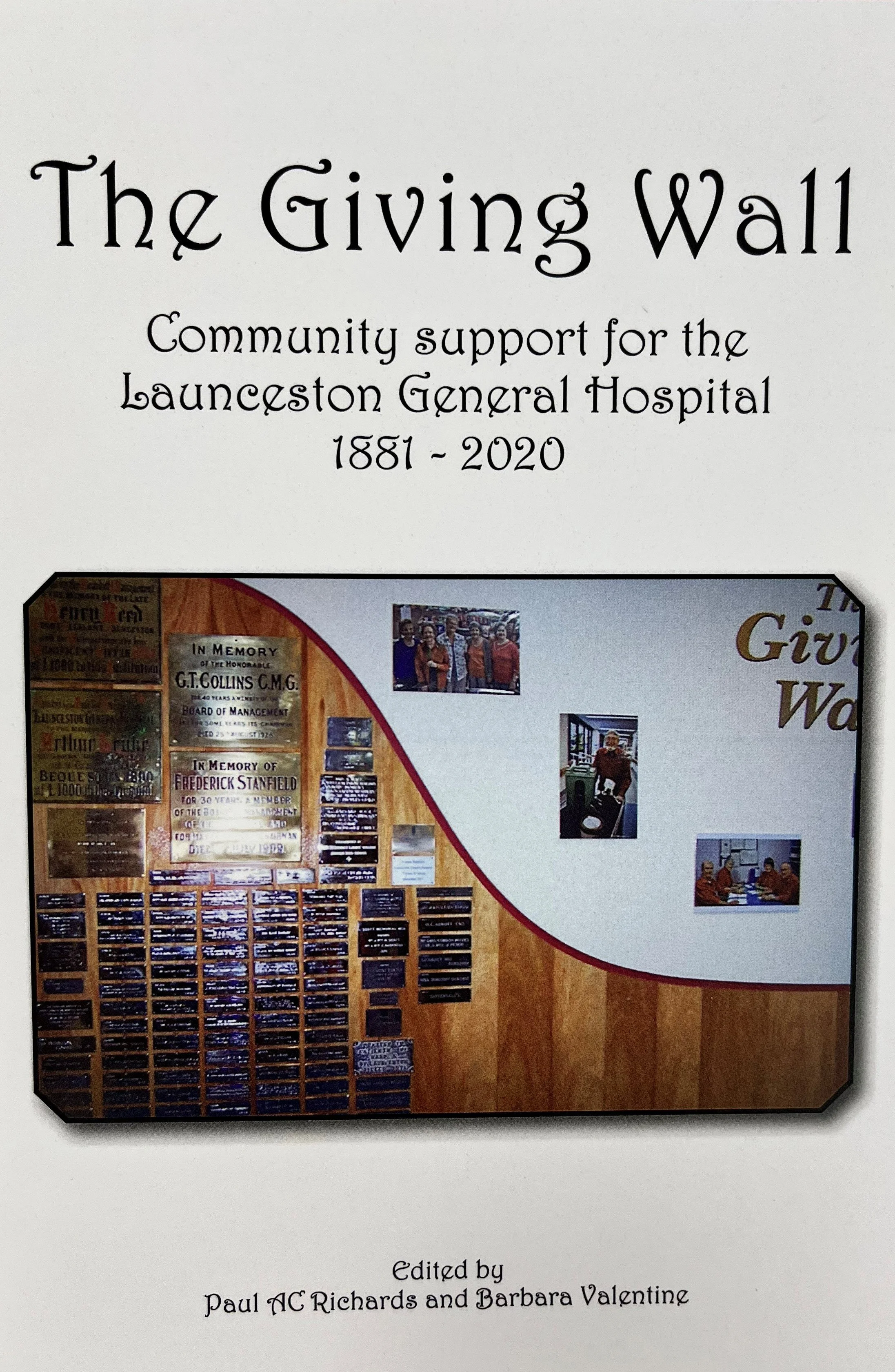
The Giving Wall, with its impressive collection of over 100 plaques, occupies a prominent position in the main entrance foyer of the Launceston General Hospital (LGH).
When the old LGH on the top side of Charles Street ceased to operate in the 1980s, the plaques were collected and kept until they could be displayed again in the present LGH. The plaques had been removed from hospital furniture, beds, outside garden seating, donated equipment and from the walls of several wards.
In 2006, the LGH Historical Committee decided that the salvaged plaques, which recognised community support for the hospital over a long period, be mounted on a board and displayed to the public. The plaques were cleaned, polished and given a protective coating to prevent tarnishing.
On 4 December 2011, the Chair of the LGH Historical Committee, Dr John Morris, unveiled the Giving Wall.
The four brass plaques were installed in the first LGH which opened in 1863, the majority were displayed in the LGH which was built between 1937 and 1942, and several plaques relate to the present hospital.
A notable feature of the Giving Wall is the number of plaques with the date 1942. Their provenance is interesting.
The foundation stone of the first section of the Launceston public hospital rebuilding scheme was laid by Premier, Mr A.G. Ogilvie KC, on 20 March 1937. In his address at the ceremony, Dr John Ramsay, chairman of the hospital board of management, "mentioned that the contract for the section now being carried out did not provide for furniture. The board had promised the Government that it would do the furnishing with the assistance of the public and the hospital auxiliaries." In concluding his speech "the Premier made a special appeal to the people of Launceston and surrounding districts to see that the new section of the hospital was properly furnished.” The plan was for a gradual rebuilding on the site of the 1863 hospital: the remaining sections were built during the years up to 1942.
Community support for the Launceston General Hospital 1881-2020.
edited by Paul AC Richards and Barbara Valentine
The Giving Wall, with its impressive collection of over 100 plaques, occupies a prominent position in the main entrance foyer of the Launceston General Hospital (LGH).
When the old LGH on the top side of Charles Street ceased to operate in the 1980s, the plaques were collected and kept until they could be displayed again in the present LGH. The plaques had been removed from hospital furniture, beds, outside garden seating, donated equipment and from the walls of several wards.
In 2006, the LGH Historical Committee decided that the salvaged plaques, which recognised community support for the hospital over a long period, be mounted on a board and displayed to the public. The plaques were cleaned, polished and given a protective coating to prevent tarnishing.
On 4 December 2011, the Chair of the LGH Historical Committee, Dr John Morris, unveiled the Giving Wall.
The four brass plaques were installed in the first LGH which opened in 1863, the majority were displayed in the LGH which was built between 1937 and 1942, and several plaques relate to the present hospital.
A notable feature of the Giving Wall is the number of plaques with the date 1942. Their provenance is interesting.
The foundation stone of the first section of the Launceston public hospital rebuilding scheme was laid by Premier, Mr A.G. Ogilvie KC, on 20 March 1937. In his address at the ceremony, Dr John Ramsay, chairman of the hospital board of management, "mentioned that the contract for the section now being carried out did not provide for furniture. The board had promised the Government that it would do the furnishing with the assistance of the public and the hospital auxiliaries." In concluding his speech "the Premier made a special appeal to the people of Launceston and surrounding districts to see that the new section of the hospital was properly furnished.” The plan was for a gradual rebuilding on the site of the 1863 hospital: the remaining sections were built during the years up to 1942.