
 Image 1 of 1
by P.A Richards and Colleagues
This book is the third in a series of books on iodine deficiency in Tasmania.
Goitre Monitor: The History of Iodine Deficiency in Tasmania, written and edited by Paul A.C. Richards AM and Dr John C. Stewart in 2007.
Iodophor: Tamed Iodine: The Status of Iodine in Tasmania Today. Paul and several of his colleagues, some 14 years on, reviewed the status of iodine in Tasmania in light of the mandatory fortification of bread with iodised salt throughout Australia and New Zealand. Guest essays from Dr Alex D. Stewart and Sarah Bath on the status of Iodine in the United Kingdom, and Drs Sheila Skaeff and Louise Brough in New Zealand add a further dimension to the story of iodine deficiency, prophylactic measures, and an ever-changing iodine environment.
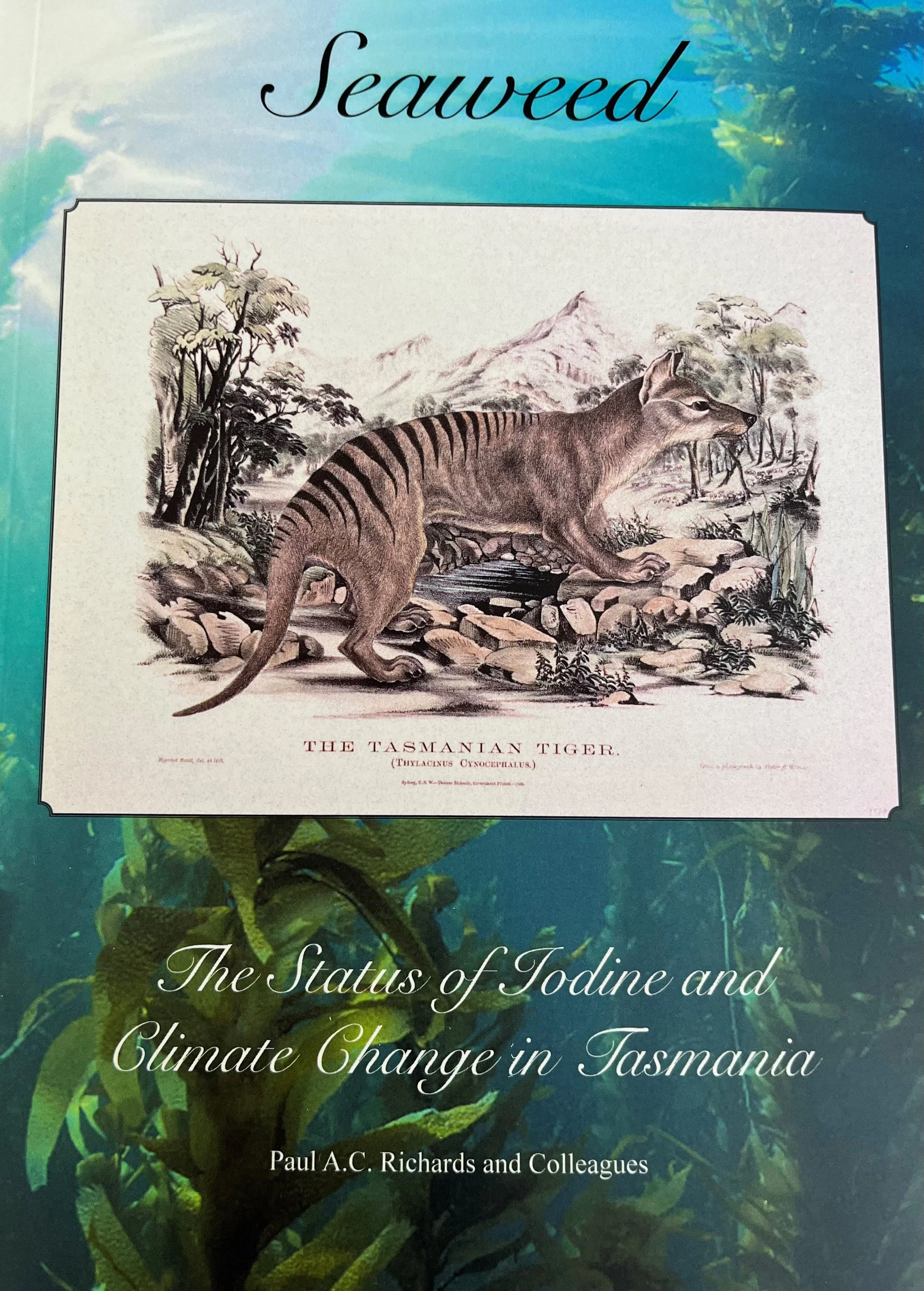
Seaweed: The Status of Iodine and Climate Change in Tasmania, the final book in this trilogy of Iodine deficiency, introduces Dr Peter Smyth from the Republic of Ireland and Yuhi Satoh from Japan as new collaborators, adding yet a further dimension to the status of iodine and Climate Change.
The first signs of iodine deficiency in Tasmania were recorded in 1833, three decades after settlement. It is interesting to note that the indigenous inhabitants of some 40,000 years never developed goitre or showed any signs of iodine deficiency. Likewise, the convict body (both male and female) 1804 to the mid to late 19th equally showed no signs of goitre or thyroid disease. However, the European free settlers, and introduced animal species: sheep, cattle, goats, horses, pigs, poultry etc. have expressed iodine deficiency in the form of goitre 1833-2020. The history of this phenomenon was dealt with in Goitre Monitor. However, a more detailed account of why the convict body did not experience such deficiency is explored in 'Iodophor'.
The history of iodine deficiency is a fascinating one, especially as experienced in Tasmania since European occupation. In the 21st century, we are experiencing climate change and its possible effects on the delivery of iodine via the iodine cycle to land masses. Complacency in the past by successive governments played a major role in the management and prophylactic programmes over the years in what is a moderately iodine deficient island landscape.
Today new questions arise on strategies to manage fortification, contaminants, but in particular, climate change and what effect it is having on the delivery of iodine from a marine environment.
by P.A Richards and Colleagues
This book is the third in a series of books on iodine deficiency in Tasmania.
Goitre Monitor: The History of Iodine Deficiency in Tasmania, written and edited by Paul A.C. Richards AM and Dr John C. Stewart in 2007.
Iodophor: Tamed Iodine: The Status of Iodine in Tasmania Today. Paul and several of his colleagues, some 14 years on, reviewed the status of iodine in Tasmania in light of the mandatory fortification of bread with iodised salt throughout Australia and New Zealand. Guest essays from Dr Alex D. Stewart and Sarah Bath on the status of Iodine in the United Kingdom, and Drs Sheila Skaeff and Louise Brough in New Zealand add a further dimension to the story of iodine deficiency, prophylactic measures, and an ever-changing iodine environment.
Seaweed: The Status of Iodine and Climate Change in Tasmania, the final book in this trilogy of Iodine deficiency, introduces Dr Peter Smyth from the Republic of Ireland and Yuhi Satoh from Japan as new collaborators, adding yet a further dimension to the status of iodine and Climate Change.
The first signs of iodine deficiency in Tasmania were recorded in 1833, three decades after settlement. It is interesting to note that the indigenous inhabitants of some 40,000 years never developed goitre or showed any signs of iodine deficiency. Likewise, the convict body (both male and female) 1804 to the mid to late 19th equally showed no signs of goitre or thyroid disease. However, the European free settlers, and introduced animal species: sheep, cattle, goats, horses, pigs, poultry etc. have expressed iodine deficiency in the form of goitre 1833-2020. The history of this phenomenon was dealt with in Goitre Monitor. However, a more detailed account of why the convict body did not experience such deficiency is explored in 'Iodophor'.
The history of iodine deficiency is a fascinating one, especially as experienced in Tasmania since European occupation. In the 21st century, we are experiencing climate change and its possible effects on the delivery of iodine via the iodine cycle to land masses. Complacency in the past by successive governments played a major role in the management and prophylactic programmes over the years in what is a moderately iodine deficient island landscape.
Today new questions arise on strategies to manage fortification, contaminants, but in particular, climate change and what effect it is having on the delivery of iodine from a marine environment.