
 Image 1 of 1
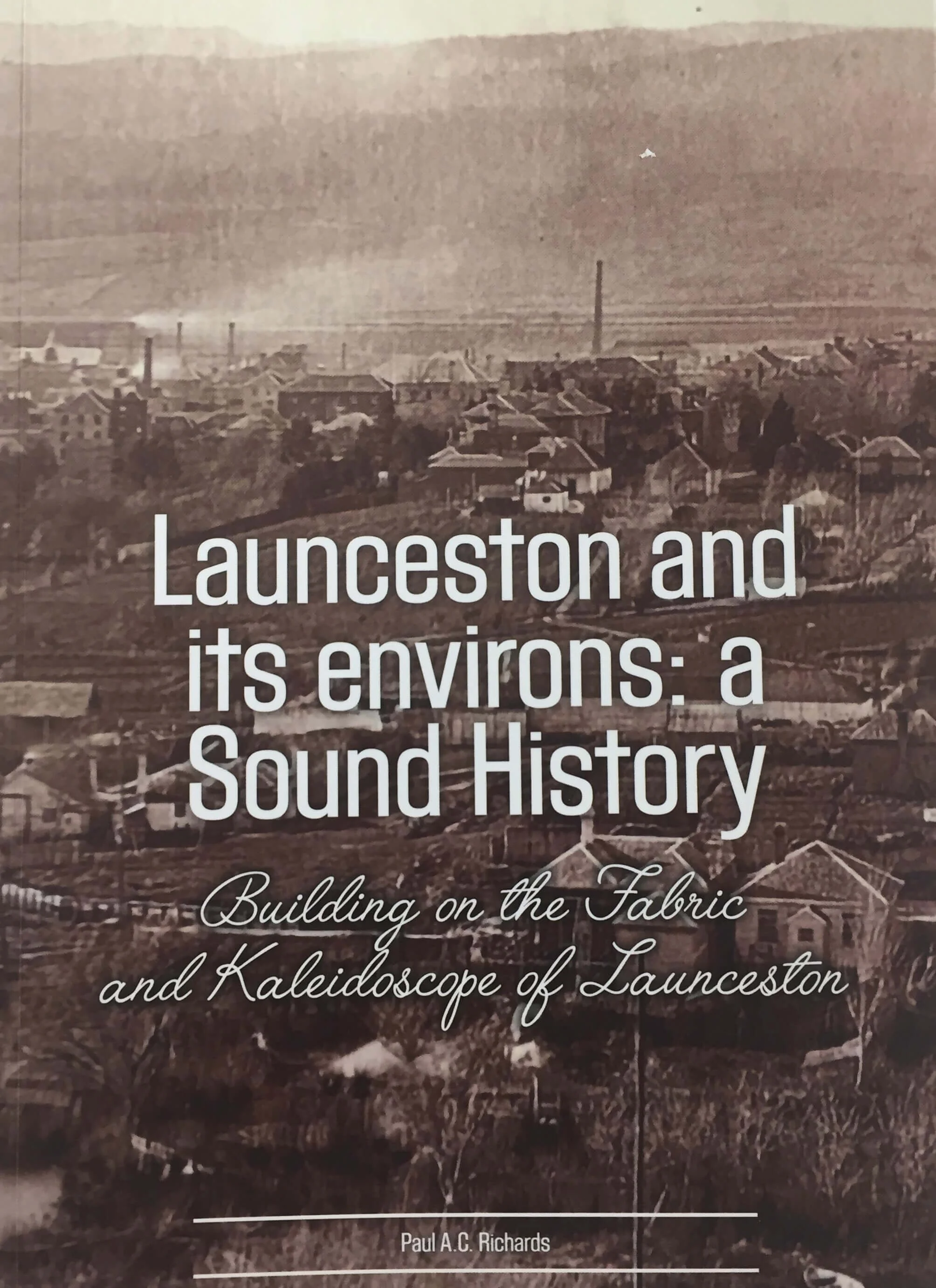
Building on the Fabric and Kaleidoscope of Launceston
by Paul A.C. Richards
Tells the history of Launceston through sound with several essays from local historians.
“I wonder how many people experience the sense of peace and uninterrupted reflection that comes from the 'quiet' of nature, unaffected by human sounds? I know I am acutely aware of how special it is when I am fishing in a stream and only hear the rippling of the water, the song of a blue wren, the rustle of trees in an afternoon breeze and nothing else. Whenever I'm in a place of such serenity, whether a bubbling country stream or an early morning musing on some creative writing at home, I am awed.
It is only when you become aware of the sounds around you that you appreciate the municipality of sound which can be mesmerizing whether it be in a city or in the natural surroundings of a country landscape. Surprisingly that is the only time most people notice the sounds that they can hear - when they stop and reflect.
The sound of traffic is always synonymous with towns and cities. The sound of screeching seagulls congers (sic) up a day at the seaside and the sound of the wrens, tits, crows, magpies and parrots, the peacefulness of the countryside.
The cooing of doves and cry of ravens always echo my travels to the UK and the ancient villages peppered throughout the landscape. I miss the ravens but still enjoy the cooing of doves in the suburban landscape of Launceston.”
Full contents:
Chpt. 1 The philosophical approach to history through sound, water, fire and wind
Chpt. 2 The sounds of the Tamar and the fate of the Lady Nelson
Chpt. 3 Settlement on the confluence of the North and South Esk rivers
Chpt. 4 The chime and peel of bells
Chpt. 5 The sounds of enterprise
Chpt. 6 Launceston transport: trams, trains and buses 1871-2019
Chpt. 7 Winds of time
Chpt. 8 Fire in the belly
Chpt. 9 Water the elixir of life
Chpt. 10 The sound of communication
Building on the Fabric and Kaleidoscope of Launceston
by Paul A.C. Richards
Tells the history of Launceston through sound with several essays from local historians.
“I wonder how many people experience the sense of peace and uninterrupted reflection that comes from the 'quiet' of nature, unaffected by human sounds? I know I am acutely aware of how special it is when I am fishing in a stream and only hear the rippling of the water, the song of a blue wren, the rustle of trees in an afternoon breeze and nothing else. Whenever I'm in a place of such serenity, whether a bubbling country stream or an early morning musing on some creative writing at home, I am awed.
It is only when you become aware of the sounds around you that you appreciate the municipality of sound which can be mesmerizing whether it be in a city or in the natural surroundings of a country landscape. Surprisingly that is the only time most people notice the sounds that they can hear - when they stop and reflect.
The sound of traffic is always synonymous with towns and cities. The sound of screeching seagulls congers (sic) up a day at the seaside and the sound of the wrens, tits, crows, magpies and parrots, the peacefulness of the countryside.
The cooing of doves and cry of ravens always echo my travels to the UK and the ancient villages peppered throughout the landscape. I miss the ravens but still enjoy the cooing of doves in the suburban landscape of Launceston.”
Full contents:
Chpt. 1 The philosophical approach to history through sound, water, fire and wind
Chpt. 2 The sounds of the Tamar and the fate of the Lady Nelson
Chpt. 3 Settlement on the confluence of the North and South Esk rivers
Chpt. 4 The chime and peel of bells
Chpt. 5 The sounds of enterprise
Chpt. 6 Launceston transport: trams, trains and buses 1871-2019
Chpt. 7 Winds of time
Chpt. 8 Fire in the belly
Chpt. 9 Water the elixir of life
Chpt. 10 The sound of communication