
 Image 1 of 1
by Paul A.C. Richards and colleagues
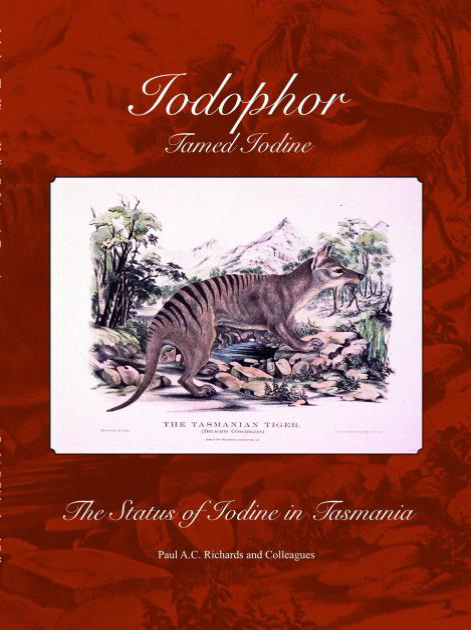
This book is a sequel to Goitre Monitor: The History of Iodine Deficiency in Tasmania written and edited by Dr John C. Stewart and Paul A.C. Richards in 2007. Today, some 14 years on, several of my colleagues and I have reviewed the status of iodine in Tasmania in light of the mandatory fortification of bread with iodised salt throughout Australia and New Zealand. Guest essays from Drs Alex D. Stewart and Sarah Bath on the status of iodine in the United Kingdom, and Drs Sheila Skaeff and Louise Brough in New Zealand add a further dimension to the story of iodine deficiency, prophylactic measures and an ever-changing iodine environment.
The first signs of iodine deficiency in Tasmania were recorded in 1833, three decades after settlement. It is interesting to note that the indigenous inhabitants of some 40,000 years never developed goitre or showed any signs of iodine deficiency. Likewise the convict body, both male and female from 1804 to the mid to late 19th century, showed no signs of goitre or thyroid disease. However, only European free settlers and introduced animal species - sheep, cattle, goats, horses, pigs, poultry, etc. have expressed iodine deficiency in the form of goitre from 1833 to 2020. The history of this phenomenon was dealt with in Goitre Monitor. Though a more detailed account of why the convict body did not experience such deficiency is explored in this present book.
by Paul A.C. Richards and colleagues
This book is a sequel to Goitre Monitor: The History of Iodine Deficiency in Tasmania written and edited by Dr John C. Stewart and Paul A.C. Richards in 2007. Today, some 14 years on, several of my colleagues and I have reviewed the status of iodine in Tasmania in light of the mandatory fortification of bread with iodised salt throughout Australia and New Zealand. Guest essays from Drs Alex D. Stewart and Sarah Bath on the status of iodine in the United Kingdom, and Drs Sheila Skaeff and Louise Brough in New Zealand add a further dimension to the story of iodine deficiency, prophylactic measures and an ever-changing iodine environment.
The first signs of iodine deficiency in Tasmania were recorded in 1833, three decades after settlement. It is interesting to note that the indigenous inhabitants of some 40,000 years never developed goitre or showed any signs of iodine deficiency. Likewise the convict body, both male and female from 1804 to the mid to late 19th century, showed no signs of goitre or thyroid disease. However, only European free settlers and introduced animal species - sheep, cattle, goats, horses, pigs, poultry, etc. have expressed iodine deficiency in the form of goitre from 1833 to 2020. The history of this phenomenon was dealt with in Goitre Monitor. Though a more detailed account of why the convict body did not experience such deficiency is explored in this present book.