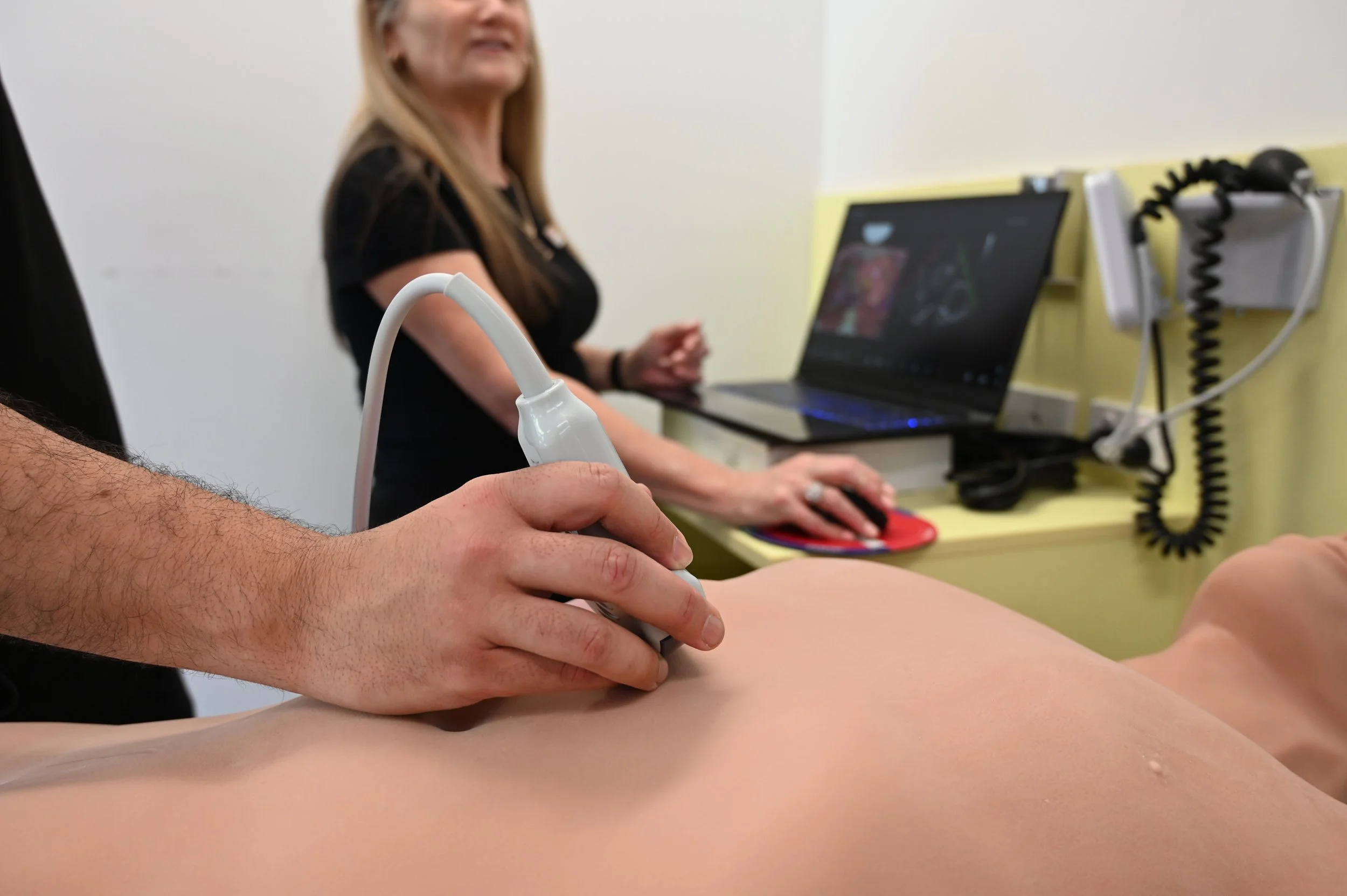
Anonymous donation secures training device for regional clinicians
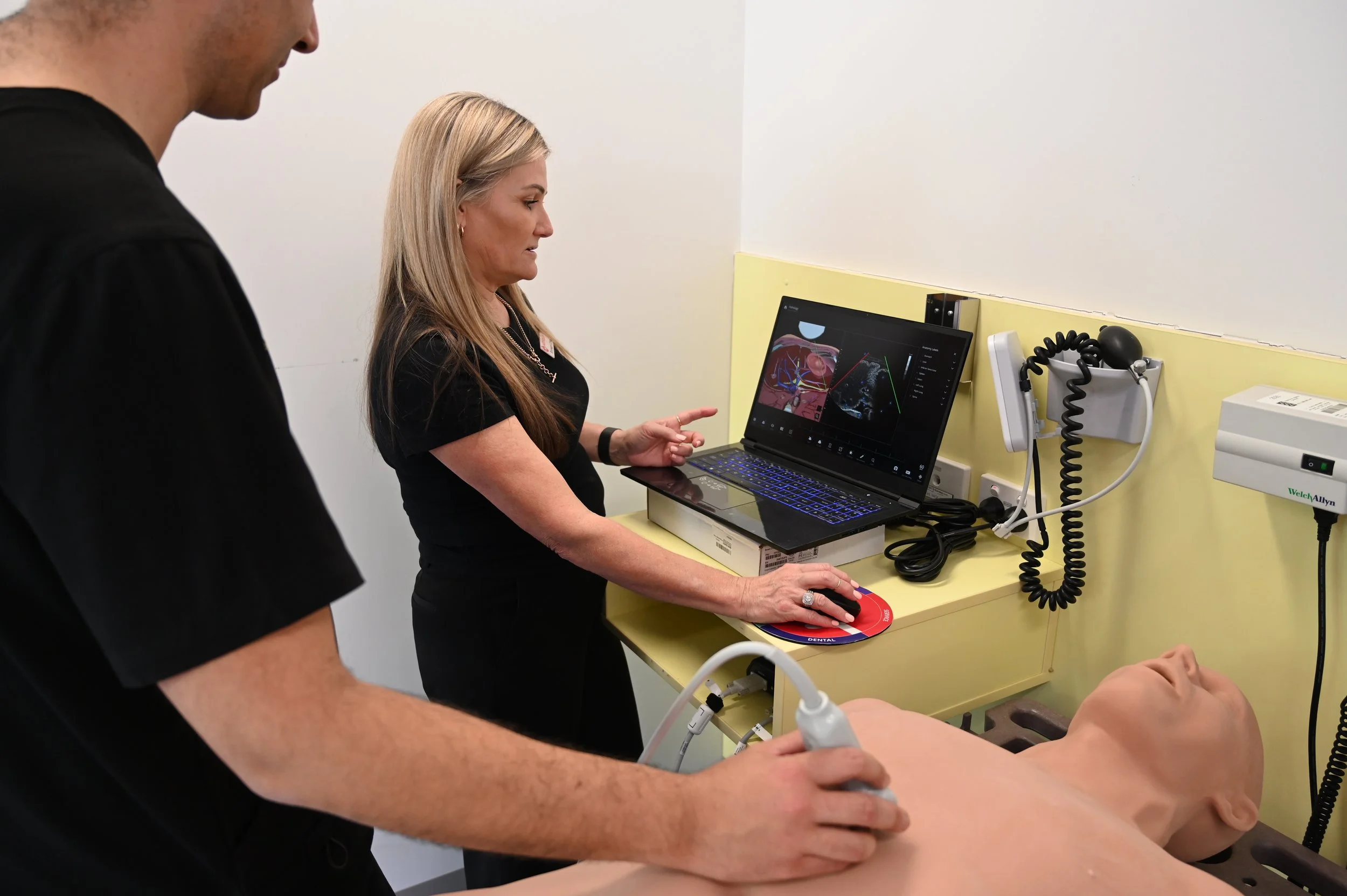
Dr Rohan Church receives training with the new ultrasound trainer to help LGH and rural clinicians develop their skills using ultrasound in emergency and urgent patient care situations.
The Clifford Craig Foundation, with the generous support of a $50,000 donation from an anonymous local, has helped to bridge the funding gap to secure a new $100,000 point-of-care ultrasound (POCUS) simulator, which will be used for training Launceston General Hospital (LGH) clinicians and GPs in rural and remote areas of Tasmania.
The POCUS machine will play a vital role in patient care and supporting education and clinical training. The machine enables staff to practice and refine essential ultrasound skills in a safe simulation environment, ensuring healthcare professionals are well-prepared for real-world scenarios. This is particularly crucial in emergency and obstetric settings, where timely and accurate ultrasound interpretation can save lives.
“We are thrilled to learn this simulator will be used for remote training of clinicians in rural areas also, such as Deloraine and Flinders Island,” said Clifford Craig Foundation’s CEO, Vanessa Cahoon.
The need for this equipment was identified by the Emergency Department Education Team, with training to be delivered by senior clinicians.
The remainder of funding has been provided by the Australasian College of Emergency Medicine's (ACEM) Emergency Medicine Education and Training (EMET) program, a federal government-funded program to support rural and remote medicine practitioners.
This collaborative achievement marks a pivotal moment for clinician education and patient care in the region. Dr Rohan Church, Staff Specialist in Emergency Medicine, expressed his enthusiasm.
“This equipment will assist the Emergency Department to provide training to hospital specialists, registrars, and other clinicians to ensure they can use Point-of-Care Ultrasound effectively. It will open doors to education-based skills development and possibly encourage research projects related to its use.”
The POCUS training device is more than just a machine; its advanced software replicates a wide range of clinical scenarios, from cardiac and abdominal assessments to lung, airway, gynaecological, and breast imaging. It even includes practical pathologies such as gallstones, offering clinicians exposure to conditions they might not otherwise encounter during training.
“We don’t often get to show trainees the variety of presentations this training device offers,” Dr Church noted.
“It teaches best practice ultrasound technician skills through a simulator environment. Some workshop courses skip that completely, so this resource is bridging a skills gap and fast-tracking exposure and learnings to real-world scenarios.”
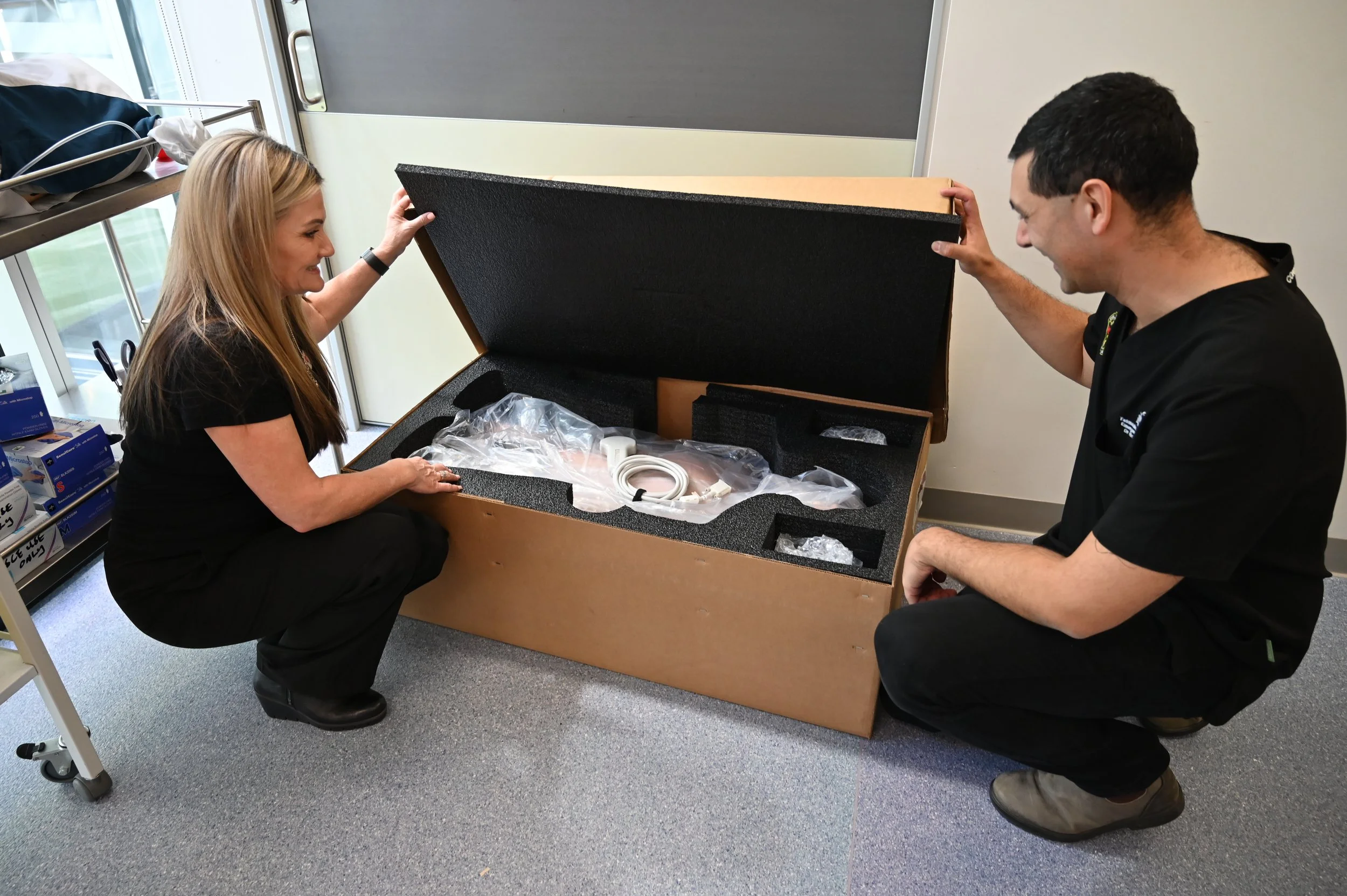
Bronwyn O’Hara, Mediquip’s Healthcare Simulation Product Specialist, unboxes the new ultrasound simulator with LGH Staff Specialist of Emergency Medicine, Dr Rohan Church.
“This milestone is a testament to what can be achieved when vision meets generosity. The anonymous donor’s contribution has not only equipped the hospital with cutting-edge technology but has also empowered a generation of healthcare professionals to deliver safer, more informed care, right here in Tasmania,” said Clifford Craig Foundation’s Chief Executive Officer, Vanessa Cahoon.
The Emergency Department has not wasted a minute utilising this training device.
“We have already started using it for several training events including training for rural General Practitioners in Deloraine and with our Emeregency Department registrars. It will also be used extensively at an upcoming two-day workshop for General Practitioners working in rural and remote settings across Tasmania.”
As this device begins its journey of shaping the future of emergency medicine, it stands as a beacon of what community support can accomplish. For donors considering how best to make a lasting impact, this story is a powerful reminder: one gift can ripple outward, shaping clinical training locally and ultimately improving health outcomes in our communities regionally across Tasmania.