
 Image 1 of 1
by Paul A.C. Richards and Carol Burnett
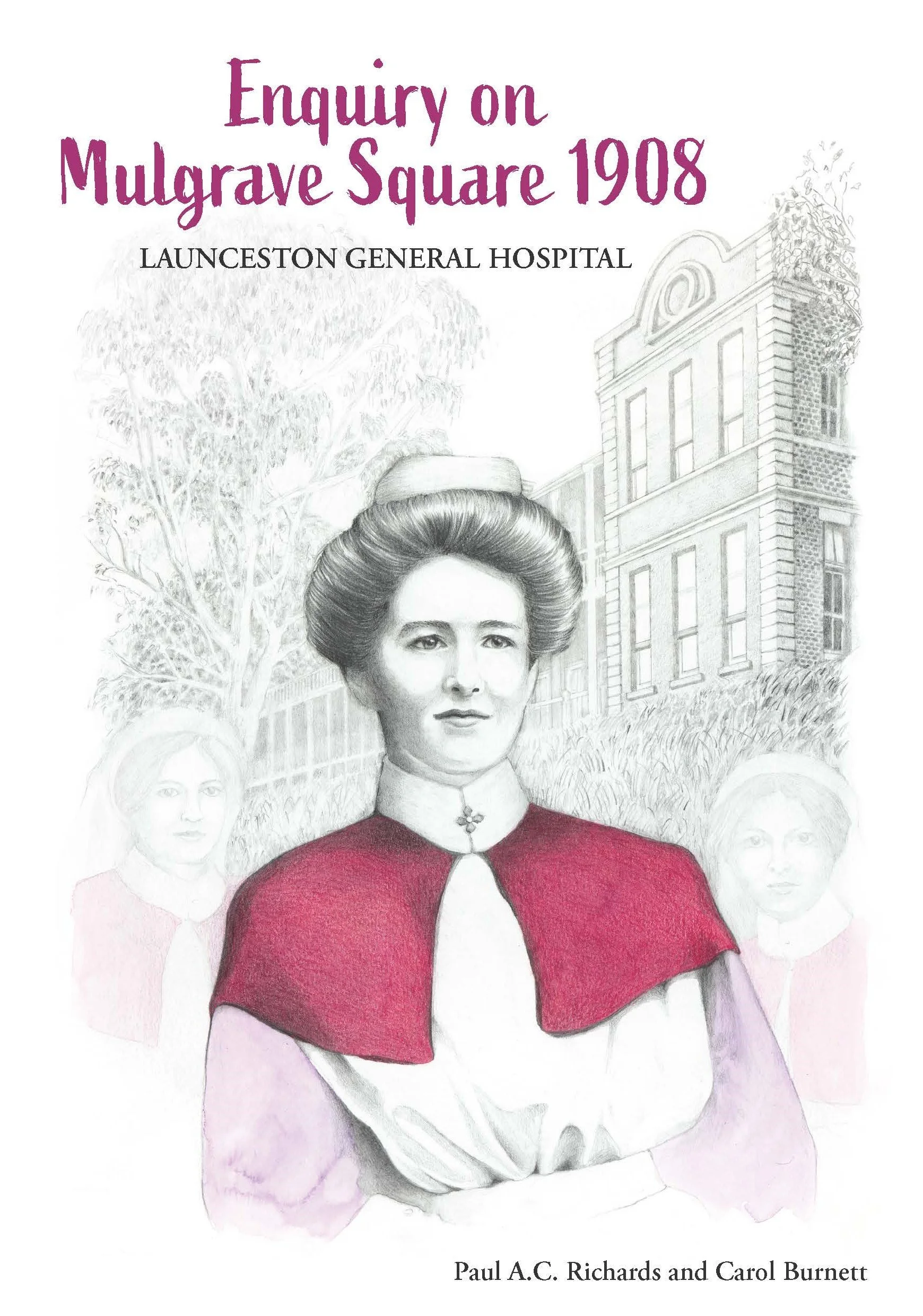
An account of the events surrounding the resignation of three nursing sisters from the Launceston General Hospital and retirement of Dr James McImery Pardey.
The enquiry of 1908 had been brewing for some time from the perspective of both the nursing and honorary medical officers at the Launceston General Hospital. At the forefront were three strong willed personalities: Drs John Ramsay, James Pardey and Miss Milne, Lady Superintendent and three senior nursing sisters.
The enquiry featured prominently in the local press in July, late August and early September 1908 but was given little attention in the Launceston General Hospital's Annual Report 1908/9. The overall fallout saw the retirement of Dr James H. Pardey, a past surgeon superintendent and honorary medical officer, and three mature and experienced nursing sisters Alma Clark - Kennedy, Burt and Emily Mary Hughes.
There is no doubt that the three nursing sisters were well informed, educated, gutsy and stood by their convictions at a time when such actions were almost unheard of. It was an era where male doctors dominated the medical profession which included nursing professions in major hospitals around Australia. Following is a transcription of the events of the enquiry, personalities and comments which unfolded in the winter and early spring of 1908.
Examiner (Launceston, Tas.: 1900 - 1954), Friday 28 August 1908, page 7
Nurse Etiquette: Nurse Clark- Kennedy said the matron had given orders that sisters were not to go round with the Honoraries if a Resident were present. The matron had said things about the patients which she did not care to repeat before a room full of gentlemen. Witness made one statement about the matron saying they were a lot of butchers. She referred then to the outside medical men. The matron mentioned no case in this connection. She simply spoke of it. At a committee meeting the matron was brought in, and Mr. Stanfield said - he did not believe what witness was saying when she was in charge of the whole of the bottom flat there was a patient in 17 who complained that she was covered with vermin. She saw the vermin. She was wearing hospital flannel, but only for a few days. She noticed one case in the theatre. The pantries were very dirty, but the wards were all right. The same towels were used for two or three patients. Witness stopped the practice when she saw it. The food was generally cold when it came to the patients. There was no means of rectifying that. There were no floor cloths or dish cloths for the nurses. She would not put up with the way Dr Ramsay spoke to her in the theatre. He spoke rudely to her several times during operations. She was sure it was lice she saw on B. There were dirty towels in the wards. She had known towels to be in the ward for a month without being washed.
by Paul A.C. Richards and Carol Burnett
An account of the events surrounding the resignation of three nursing sisters from the Launceston General Hospital and retirement of Dr James McImery Pardey.
The enquiry of 1908 had been brewing for some time from the perspective of both the nursing and honorary medical officers at the Launceston General Hospital. At the forefront were three strong willed personalities: Drs John Ramsay, James Pardey and Miss Milne, Lady Superintendent and three senior nursing sisters.
The enquiry featured prominently in the local press in July, late August and early September 1908 but was given little attention in the Launceston General Hospital's Annual Report 1908/9. The overall fallout saw the retirement of Dr James H. Pardey, a past surgeon superintendent and honorary medical officer, and three mature and experienced nursing sisters Alma Clark - Kennedy, Burt and Emily Mary Hughes.
There is no doubt that the three nursing sisters were well informed, educated, gutsy and stood by their convictions at a time when such actions were almost unheard of. It was an era where male doctors dominated the medical profession which included nursing professions in major hospitals around Australia. Following is a transcription of the events of the enquiry, personalities and comments which unfolded in the winter and early spring of 1908.
Examiner (Launceston, Tas.: 1900 - 1954), Friday 28 August 1908, page 7
Nurse Etiquette: Nurse Clark- Kennedy said the matron had given orders that sisters were not to go round with the Honoraries if a Resident were present. The matron had said things about the patients which she did not care to repeat before a room full of gentlemen. Witness made one statement about the matron saying they were a lot of butchers. She referred then to the outside medical men. The matron mentioned no case in this connection. She simply spoke of it. At a committee meeting the matron was brought in, and Mr. Stanfield said - he did not believe what witness was saying when she was in charge of the whole of the bottom flat there was a patient in 17 who complained that she was covered with vermin. She saw the vermin. She was wearing hospital flannel, but only for a few days. She noticed one case in the theatre. The pantries were very dirty, but the wards were all right. The same towels were used for two or three patients. Witness stopped the practice when she saw it. The food was generally cold when it came to the patients. There was no means of rectifying that. There were no floor cloths or dish cloths for the nurses. She would not put up with the way Dr Ramsay spoke to her in the theatre. He spoke rudely to her several times during operations. She was sure it was lice she saw on B. There were dirty towels in the wards. She had known towels to be in the ward for a month without being washed.